 Meredith Kenton
10 min read
SB 54: How It’s Shaping the Foodservice Industry for California Businesses
California’s Senate Bill (SB) 54, also known as the Plastic Pollution Prevention and Packaging Producer Responsibility Act1, is a landmark law aimed...


 JANSAN
BradyPLUS delivers strategic services and product consistency to keep your facilities cleaner and more sustainable, people safer, and operations more productive, every day.
 FOODSERVICE
Our best-in-class brands deliver the quality you demand at prices you’ll appreciate. We know how to address every need with products designed and manufactured for unmatched performance, consistency, and value.
 PACKAGING
Our range of services and key partnerships with top equipment providers and suppliers ensure productivity, safety, sustainability, and uptime. We deliver consistent quality, ensure product availability, and add value when markets fluctuate.
 ABOUT US
At BradyPLUS, we prioritize serving you by participating in local events. Visit our events page to see when we'll be in your region, offering customized solutions to meet your facility operations needs.
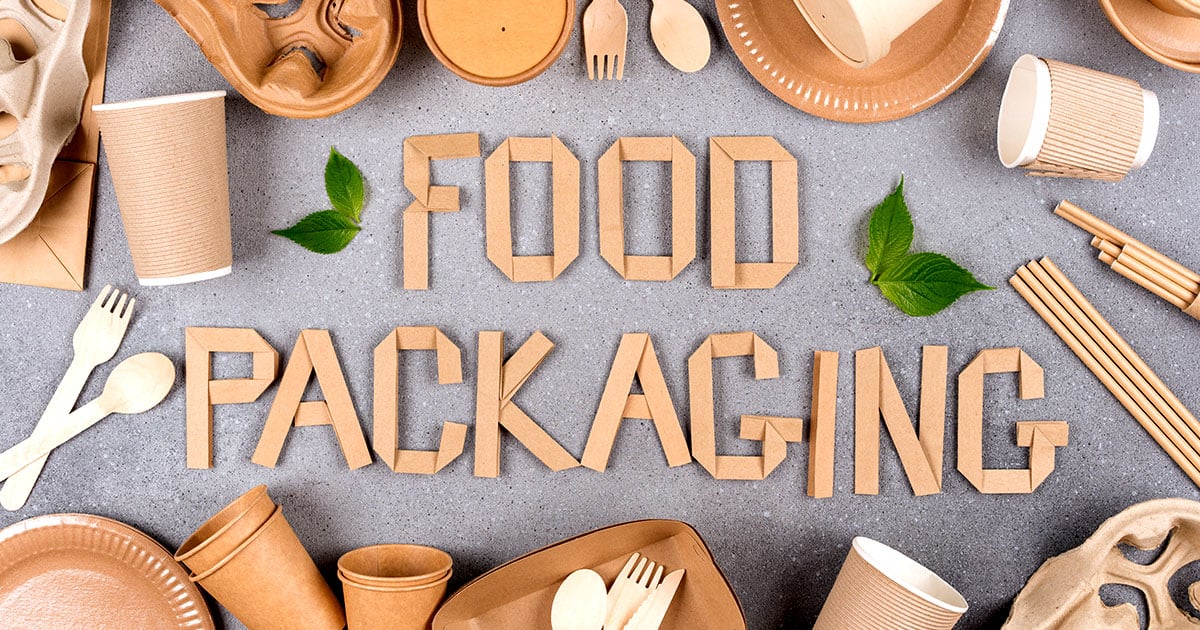
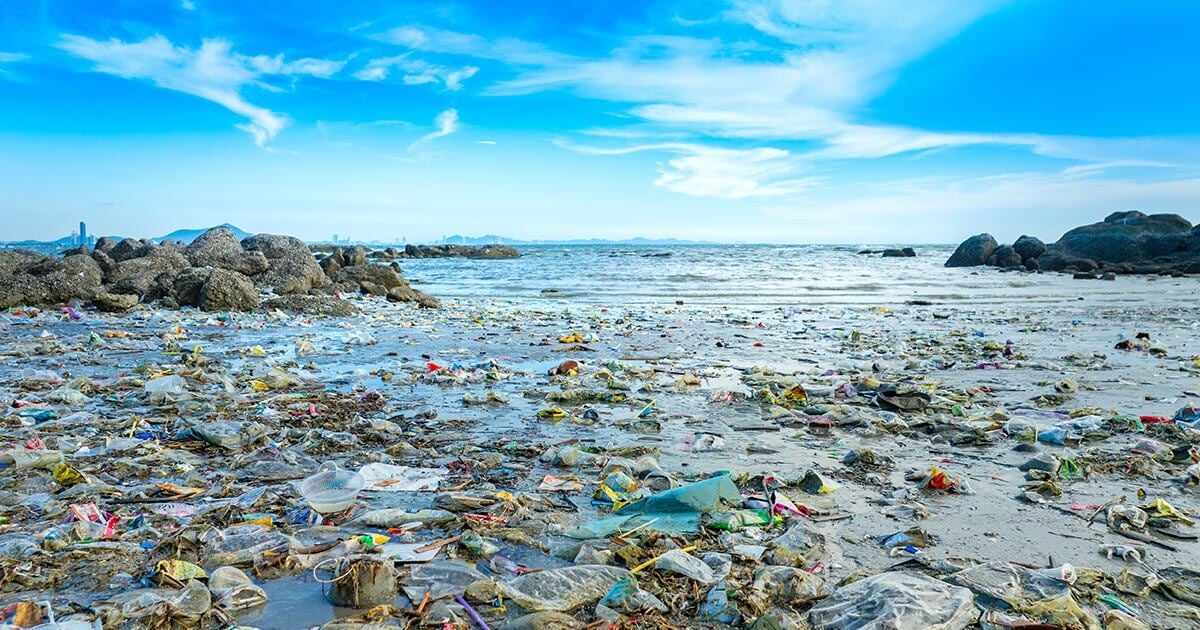
Imagine it’s 2050. You’re standing by the ocean, watching the waves roll in, but something has changed. Scientists estimate that by then, there could be more plastic in the ocean than fish.1
It’s a striking image and one that’s pushing industries, including foodservice, to rethink packaging. Today, packaging accounts for roughly 40% of global plastic waste2, adding urgency to that shift. In response, the market has shifted quickly. Compostable containers, recyclable materials, and plant-based packaging are now widely available, all positioned as more sustainable options. But focusing on materials alone doesn’t tell the full story.
Food waste remains one of the biggest environmental challenges in foodservice, and packaging plays a big role in it. When packaging performs well, it extends shelf life, protects food during transport, and reduces spoilage. When it doesn’t, it contributes to waste on a much larger scale.
That’s where sustainable food packaging decisions are changing. It’s no longer just about what packaging is made from. Now, operators need to consider how well it performs in real conditions and whether it reduces total waste.
So, the question isn’t just which options are available—it's which options will actually work for your business? Let’s help you find out.

When sustainable options first hit the market, decisions were driven by material labels: recyclable, compostable, or paper instead of plastic.
Now we know that the material tells only part of the story…
What matters more is how packaging performs across its lifecycle. That includes how it holds up during use, how it supports food quality, and what happens after disposal.
A recyclable container that becomes contaminated with food residue may never be processed as intended. Compostable packaging only delivers value when commercial composting infrastructure is available, which is still limited in many areas. Even rapidly renewable fiber containers coated to prevent leaking may not be compostable at all.
These materials can be effective solutions, but only when they align with how they’re used and how they’re disposed of. Choosing sustainable food packaging today requires looking beyond the label and evaluating how each option fits your operation’s goals, your waste stream, and your day-to-day realities.
One growing sustainable packaging trend we’re seeing more of is the focus on reducing the amount of packaging used in the first place.
Foodservice operators are exploring reusable container systems, refillable models, and operational changes like offering utensils and straws only when requested.4 These adjustments reduce unnecessary waste without requiring major operational changes.
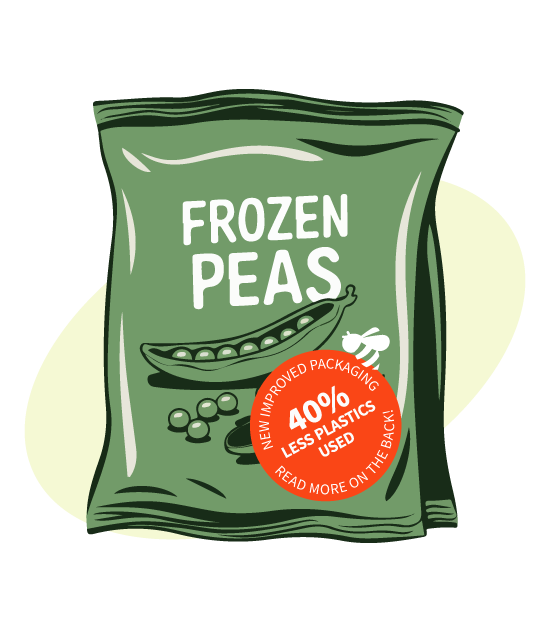
At the same time, source reduction is gaining traction, with packaging designed to use less material while maintaining performance. Options like mineral-filled polypropylene (MFPP) can use up to 40% less plastic during manufacturing, while post-consumer recycled (PCR) materials give new life to products like towels, tissue, and plastic containers.
In high-volume environments, even small reductions can have a meaningful impact over time.
Packaging decisions affect more than just what ends up in our landfills. They play a major role in the consumer’s experience and perception of your product!
When packaging underperforms, the result is often spoiled or damaged food. That increases waste, adds cost, and undermines sustainability goals.
This is why many of the most practical sustainable packaging examples focus on performance:



According to the USDA, 40% of the country’s food supply goes to waste each year5, so there is growing focus on developing packaging that helps extend freshness and reduce spoilage.5 Preventing food waste often delivers a greater environmental benefit than switching materials alone.
Packaging that protects food effectively helps ensure it is consumed rather than discarded. That outcome has a measurable impact.

Cost has been one of the biggest complaints we hear when it comes to adopting sustainable food packaging.
Thankfully, more eco-friendly food packaging options are entering the market, and production is scaling. At the same time, businesses are recognizing the cost implications of waste, spoilage, and inefficient packaging.
Improving packaging performance and reducing waste can contribute to cost savings over time. Thus, sustainability is increasingly being treated as part of an overall operational strategy rather than a separate initiative.
Based on current sustainable packaging trends, successful strategies tend to focus on:
There isn’t a single approach that works for every business. The right solution depends on your products, your customers, and how your operation runs day to day.
If you’re evaluating sustainable food packaging or looking for practical examples, having a structured approach can make the process more manageable.
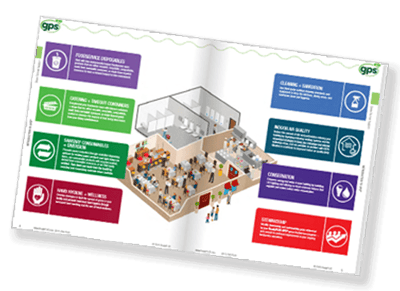
The BradyPLUS GPS® Green Partner Support™ guide outlines a comprehensive approach to building a more sustainable foodservice program. It brings together environmentally preferable products, verified certifications, and hands-on support to help you make informed decisions.
Download the BradyPLUS GPS® Green Partner Support Guide today to get started.

Sources:

10 min read
California’s Senate Bill (SB) 54, also known as the Plastic Pollution Prevention and Packaging Producer Responsibility Act1, is a landmark law aimed...
8 min read
Since the pandemic, there has been a spike in grab & go meals and deliveries leading to new trends in food packaging for safety, functionality, and...
23 min read
It started with a dream. A dream of a sustainably produced, more digestible ice cream that is better for the environment and brings people joy. This...